

 Call Us Now
 Email Us Now
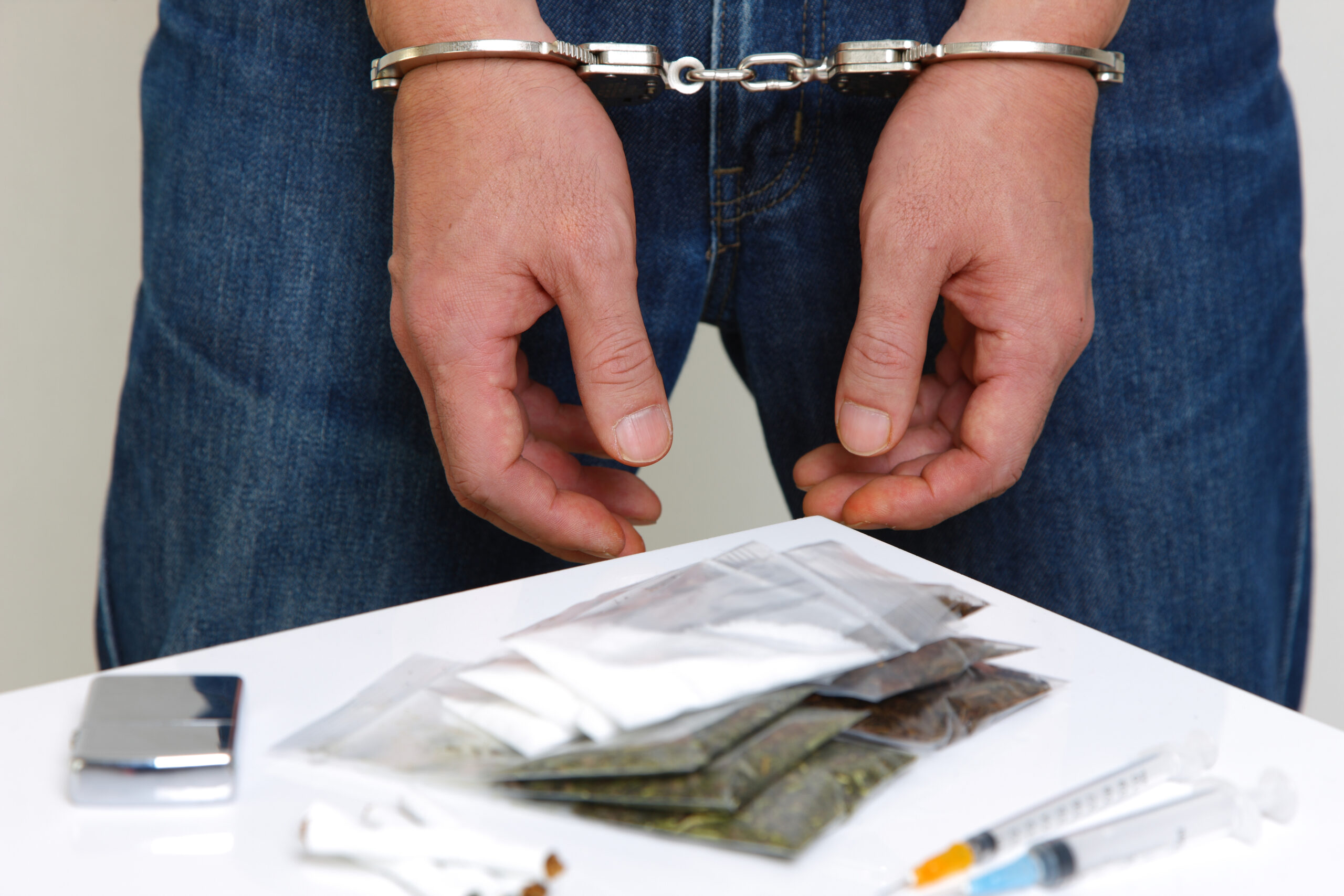
Texas has some of the strictest drug laws in the country. The sentence a person faces for drug possession depends on the type of substance, how much of it was involved, where the arrest happened, and whether the person has a prior record. A small amount can mean probation. A larger amount can mean decades in prison.
Being charged is not the same as being convicted, and a first arrest does not automatically lead to jail. Below, we explain how Texas sets minimum sentences for drug possession, what penalties apply to common drugs, and what options may be available. If you or a family member has been arrested, call Palmer Perlstein at 469-966-7614 to talk through your case before your first court date.
Does Texas Have Mandatory Minimum Sentences for Drug Possession?
Texas does not use “mandatory minimums” the same way federal law does. Instead, every offense level carries a minimum and maximum punishment range under Chapter 12 of the Texas Penal Code. If a person is sentenced to prison, the judge or jury cannot go below the minimum for that offense level.
That minimum is not always the end of the story. In many possession cases, a judge or jury can place a defendant on community supervision (probation) instead of prison, as long as the sentence is 10 years or less and no legal exception applies. For some first-time, low-level possession charges, Texas law actually requires probation.
Federal law is different. Federal mandatory minimum sentences, such as those under 21 U.S.C. Section 841, mainly apply to manufacturing, distribution, and possession with intent to distribute larger quantities. Most simple possession cases in Texas are prosecuted in state court.
How Are Drugs Classified Under Texas Law?
The Texas Controlled Substances Act sorts most drugs into penalty groups. Penalties rise with the danger of the substance and its weight, which includes any fillers or other substances mixed with it.
- Penalty Group 1: Cocaine, heroin, methamphetamine, oxycodone, and similar drugs
- Penalty Group 1-B: Fentanyl and related substances
- Penalty Group 1-A: LSD, measured in abuse units rather than grams
- Penalty Group 2: Drugs such as ecstasy (MDMA) and THC concentrates such as vape cartridges and wax
- Penalty Group 3: Certain prescription drugs, including benzodiazepines like Xanax and Valium
- Penalty Group 4: Certain compounds containing limited amounts of narcotics
Marijuana is handled under its own section of the law, with penalties based on the amount possessed.
What Are the Penalties for Drug Possession in Texas?
Penalty Group 1 and 1-B (Including Cocaine, Meth, Heroin, and Fentanyl)
- Less than 1 gram: State jail felony, 180 days to 2 years in a state jail facility and a fine of up to $10,000
- 1 to 4 grams: Third-degree felony, 2 to 10 years in prison and a fine of up to $10,000
- 4 to 200 grams: Second-degree felony, 2 to 20 years in prison and a fine of up to $10,000
- 200 to 400 grams: First-degree felony, 5 to 99 years or life in prison and a fine of up to $10,000
- 400 grams or more: 10 to 99 years or life in prison and a fine of up to $100,000
Penalty Group 2
- Less than 1 gram: State jail felony
- 1 to 4 grams: Third-degree felony
- 4 to 400 grams: Second-degree felony
- 400 grams or more: 5 to 99 years or life in prison and a fine of up to $50,000
Penalty Groups 3 and 4
- Less than 28 grams: Class A misdemeanor for Penalty Group 3 (up to 1 year in jail) or Class B misdemeanor for Penalty Group 4 (up to 180 days in jail)
- 28 to 200 grams: Third-degree felony
- 200 to 400 grams: Second-degree felony
- 400 grams or more: 5 to 99 years or life in prison and a fine of up to $50,000
Marijuana
- 2 ounces or less: Class B misdemeanor, up to 180 days in jail
- More than 2 ounces up to 4 ounces: Class A misdemeanor, up to 1 year in jail
- More than 4 ounces up to 5 pounds: State jail felony
- More than 5 pounds up to 50 pounds: Third-degree felony
- More than 50 pounds up to 2,000 pounds: Second-degree felony
- More than 2,000 pounds: 5 to 99 years or life in prison and a fine of up to $50,000
How Many Grams Is a Felony in Texas?
It depends on the penalty group. Possession of any amount of a Penalty Group 1, 1-B, or 2 substance is a felony, even if it is less than a gram. For Penalty Groups 3 and 4, possession becomes a felony at 28 grams. For marijuana, possession becomes a felony at more than 4 ounces.
Possession with intent to deliver is charged separately and carries higher penalties at each weight level. Factors such as packaging, scales, large amounts of cash, or messages about sales can lead prosecutors to pursue a delivery charge instead of simple possession.
What Can Increase a Drug Possession Sentence?
Several factors can push a sentence higher than the standard range:
- Drug-free zones: Under Section 481.134 of the Health and Safety Code, possession within 1,000 feet of a school or certain youth facilities can raise a state jail felony to a third-degree felony. For higher-level offenses, it can add five years to the minimum sentence and double the maximum fine.
- Prior felony convictions: Prior convictions can raise the punishment range and remove access to mandatory probation for state jail felonies.
- Involving a minor: Using a child to commit a drug offense can increase the punishment and limit probation options.
Do First-Time Drug Offenders Always Go to Jail in Texas?
No. Many first-time drug cases end without jail time. What happens depends on the charge, the amount involved, the facts of the arrest, and the options the court allows. Texas law provides several paths that keep people out of jail.
Mandatory Probation for Certain State Jail Felonies
Under Article 42A.551 of the Code of Criminal Procedure, a judge must place a defendant on community supervision for certain state jail felony possession charges, such as less than one gram of a Penalty Group 1 substance, if the defendant has no prior felony conviction. A judge can also choose to punish some state jail felonies as Class A misdemeanors.
Probation
Probation allows a person to serve their sentence in the community while following court-ordered conditions. These can include drug testing, education classes, treatment, community service, and regular check-ins with a probation officer. Violating the conditions can lead to the original sentence being imposed.
Deferred Adjudication
With deferred adjudication, the judge does not enter a conviction. The person is placed on supervision instead. If they complete every requirement, the case is dismissed without a conviction. After completing deferred adjudication, many people can petition for an order of nondisclosure, which limits who can see the record. Deferred adjudication is not available for every drug charge, but it is often an option for eligible first-time offenders.
Cite-and-Release
For certain low-level misdemeanors, including possession of up to 4 ounces of marijuana, Texas law allows officers to issue a citation instead of making an arrest. The person still has to appear in court, but they are not booked into jail at the time of the stop. Whether cite-and-release is used depends on local policy and the agency involved.
Specialty Courts in Dallas County
Dallas County offers specialty courts that focus on treatment instead of punishment. One example is STAC, which stands for Successful Treatment of Addiction through Collaboration. Participants follow a structured plan that includes counseling, drug testing, and regular court check-ins. These programs are not available in every case, but they can be a meaningful alternative to jail when a person qualifies.
What Factors Affect Whether a Drug Charge Leads to Jail?
Courts look at the facts of each case and the person involved. Some of the most important factors include:
- The type of drug and the amount involved
- Whether the person has any prior convictions
- Whether the arrest happened in a drug-free zone
- Whether the stop or search raised legal concerns
- Whether the person qualifies for probation, deferred adjudication, or a specialty court
- How local prosecutors and courts handle similar cases
What Are Common Defenses to Drug Possession Charges?
A drug charge can often be challenged. Depending on the facts, defenses may include:
- Illegal search and seizure: The Fourth Amendment protects against unreasonable searches. If police stopped you without reasonable suspicion or searched without a valid warrant, consent, or probable cause, the evidence may be suppressed. Learn more about what counts as an unlawful search and seizure.
- Lack of knowing possession: The state must prove you knowingly possessed the drugs. When drugs are found in a shared car, apartment, or bag, simply being nearby is not enough.
- Lab testing problems: The state must prove the substance is what it claims and that the weight is accurate. Testing errors, backlogs, and weight disputes can affect both the charge and the penalty level.
- Chain of custody issues: If the state cannot show how the evidence was handled from the time it was seized until it was tested, its reliability can be challenged.
- Negotiated outcomes: When the evidence is strong, a defense attorney may negotiate for a reduced charge, deferred adjudication, or entry into a treatment program.
What Should You Do After a Drug Arrest?
- Do not answer questions about the case without a lawyer present.
- Do not consent to searches of your car, home, or phone.
- Keep all paperwork, including your citation, bond papers, and court notices.
- Write down everything you remember about the stop and search while it is fresh.
- Go to every court date. A missed appearance can lead to a warrant.
- Talk to a lawyer early. Decisions about suppression motions, deferred adjudication, and treatment programs often happen early in the case.
Talk to a Drug Crimes Lawyer at Palmer Perlstein
A drug possession charge can affect your freedom, your job, and your future, but you have options. The team at Palmer Perlstein works together on every case. We review how the stop and search happened, look for problems with the evidence, and explain your options for probation, deferred adjudication, or treatment programs. Learn more about how we handle drug crimes cases in Dallas County.
If you or a loved one is facing a drug possession charge, contact us for a confidential consultation or call 469-966-7614.